An office can look clean in the morning and become messy before the workday ends. Employees use desks, meeting rooms, restrooms, and shared spaces throughout the day. Dust settles on furniture, carpets collect dirt, and trash builds up faster than expected. Without a clear cleaning routine, even a well managed workplace can become difficult to maintain.
A practical office cleaning checklist helps business owners and office managers organize cleaning responsibilities, set priorities, and keep workspaces presentable. Similar cleaning routines are important in other shared buildings, including educational facilities that require dedicated school cleaning services.
For businesses in Villa Rica, Georgia, and surrounding areas, regular office cleaning can support a comfortable working environment while reducing the stress of handling unexpected cleaning problems.
The key is to divide cleaning responsibilities into daily, weekly, and monthly tasks. This allows office managers to maintain frequently used areas without overlooking spaces that need periodic attention.
Office Cleaning Checklist and Its Importance
An office cleaning checklist is a written plan that identifies which workplace areas need cleaning, which tasks should be completed, and the frequency of each activity.
It can cover employee desks, reception areas, meeting rooms, restrooms, office floors, and shared spaces.
Instead of relying on memory, office managers can use the checklist to monitor cleaning responsibilities and identify areas requiring additional attention.
A well organized office cleaning schedule also makes communication easier. Employees and cleaning staff can see which tasks are expected and when they should be completed.
This matters because office cleaning is not only about appearance. Regular cleaning supports workplace maintenance and helps prevent dirt, dust, and waste from building up.
Daily Office Cleaning Checklist for Busy Workplaces
Daily office cleaning focuses on areas used frequently during normal business operations.
These tasks help maintain basic cleanliness between more detailed cleaning sessions.
The exact routine should reflect the office size, number of employees, and daily activity.
Desk and Workstation Cleaning
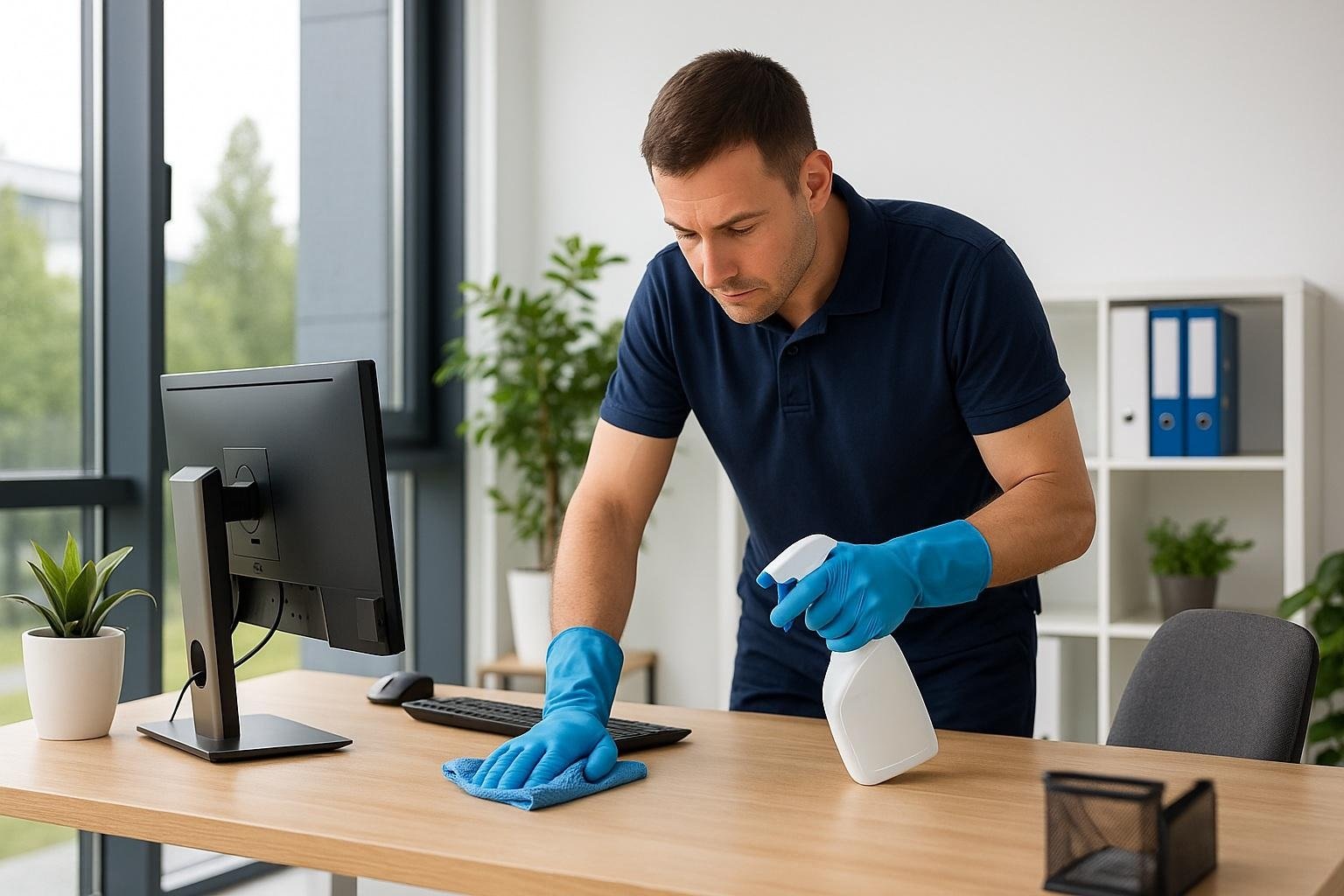
Employee desks and workstations receive regular use throughout the day.
Dust, fingerprints, and small amounts of debris can collect on work surfaces. Shared desks may require particular attention because several employees can use the same space.
A daily office cleaning checklist may include:
- Remove visible dust and debris from accessible desk surfaces.
- Wipe appropriate work surfaces.
- Empty workstation trash bins as needed.
- Clean accessible shared furniture surfaces.
- Keep walkways around workstations clear.
Personal belongings, paperwork, and electronic equipment should be handled according to workplace rules.
Reception and Waiting Area Cleaning
Reception areas are often the first spaces visitors see when entering a business.
Foot traffic can bring dirt onto floors, while seating and reception counters receive frequent use.
Regular attention helps keep these spaces presentable.
Daily tasks may include wiping reception counters, removing visible debris, cleaning accessible seating surfaces, and checking floors for dirt.
Reception cleaning should also account for the amount of visitor activity during the day.
Restroom Cleaning and Maintenance
Office restrooms require consistent attention because employees and visitors use them regularly.
Sinks, toilets, counters, and floors may need cleaning throughout the workweek.
A daily restroom cleaning routine can include cleaning fixtures, wiping appropriate surfaces, emptying trash, and checking general room condition.
The cleaning frequency may need adjustment when restroom usage increases.
Regular restroom maintenance is an important part of a wider workplace cleaning checklist.
Shared Office Areas
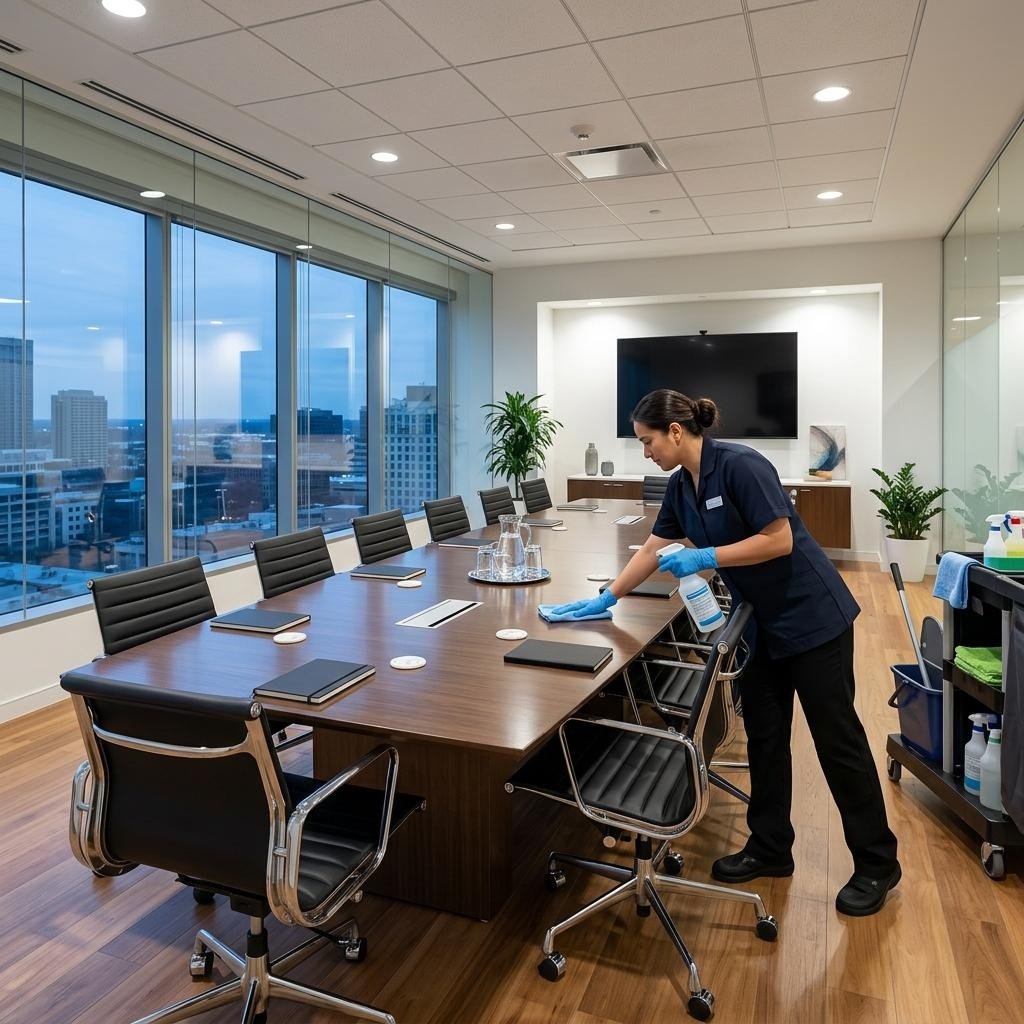
Meeting rooms and other shared spaces can become untidy after repeated use.
Tables may collect fingerprints, floors may need attention, and trash can accumulate after meetings.
Daily office cleaning should include checking these spaces and addressing visible dirt.
Keeping shared areas maintained also reduces the amount of cleaning required before the next meeting or work session.
Weekly Office Cleaning Checklist for Better Maintenance
Some office cleaning tasks require more attention than everyday surface care.
A weekly office cleaning checklist can cover areas that collect dust or dirt gradually.
These tasks support daily cleaning and help maintain spaces that may receive less attention during busy workdays.
Office Floor and Carpet Cleaning
Office floors collect dirt from employee movement, visitors, and daily activities.
Hard floors may require appropriate sweeping and mopping, while carpeted areas need regular vacuuming.
Weekly floor maintenance should consider high traffic areas and the condition of each flooring material.
If carpets show stains or buildup that routine vacuuming cannot address, additional carpet cleaning may be appropriate.
Furniture and Surface Dusting
Dust can collect on shelves, cabinets, furniture, and other accessible surfaces.
These areas may not appear dirty immediately, but buildup becomes more noticeable over time.
Weekly dusting helps maintain the appearance of office furniture and shared workspaces.
Cleaning methods should match the materials being maintained to avoid unnecessary damage.
Meeting Room Maintenance
Meeting rooms may need more detailed attention beyond daily cleaning.
Tables, chairs, accessible surfaces, and floors can collect dust and marks through regular use.
A weekly review helps identify cleaning needs that were not addressed during daily maintenance.
Office managers should also consider whether certain meeting rooms receive heavier use than others.
Office Window and Glass Cleaning
Glass doors, office windows, and accessible glass surfaces can develop fingerprints and visible marks.
Weekly attention may be appropriate for frequently touched glass surfaces.
Other windows may require less frequent cleaning depending on their location and condition.
Window cleaning should be planned according to access, surface requirements, and the cleaning work involved.
Monthly Office Cleaning Checklist for Detailed Care
Monthly cleaning focuses on areas that may not require daily or weekly attention but still need periodic maintenance.
These tasks help office managers review the condition of the workplace and address cleaning needs before they become more demanding.
Detailed Floor Inspection
A monthly inspection can reveal areas that need more attention than routine floor cleaning provides.
Look for visible stains, dirt buildup, and sections receiving heavy foot traffic.
Carpeted areas may need additional care, while hard floors should be reviewed according to their material and condition.
This inspection can help determine whether the current office cleaning schedule remains appropriate.
Less Accessible Areas
Dust and dirt can collect behind accessible furniture, along corners, and around office fixtures.
These areas may be overlooked during daily cleaning.
Monthly attention can help keep the cleaning routine more complete.
Cleaning staff should only move furniture or equipment when it is safe and permitted by the workplace.
Storage and Shared Space Maintenance
Office storage areas and shared spaces can gradually collect dust and unwanted clutter.
Reviewing these areas each month can help identify cleaning tasks that need attention.
Trash removal and organizing services may also be relevant when a workplace has accumulated unnecessary materials.
A monthly office cleaning checklist should reflect the actual condition of these spaces rather than requiring identical work every month.
Steps for Creating an Effective Office Cleaning Schedule
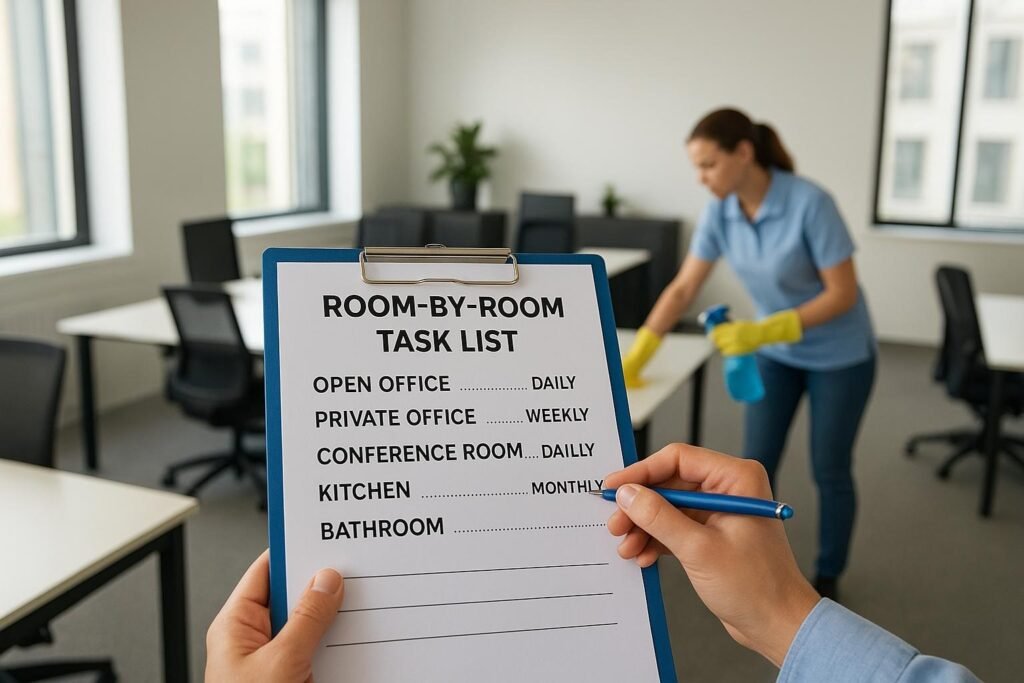
A cleaning checklist works best when it reflects the way a workplace operates.
A small office may have different cleaning requirements from a larger corporate office with several shared rooms.
The following process can help office managers organize their cleaning responsibilities.
Step 1: Review the Office Layout
Begin by reviewing the areas used during normal business operations.
Consider workstations, meeting rooms, reception spaces, restrooms, and office floors.
Pay attention to areas receiving frequent foot traffic.
This review helps identify which spaces require regular cleaning and which can be maintained less frequently.
Step 2: Divide Tasks by Frequency
Separate cleaning responsibilities into daily, weekly, and monthly activities.
Daily tasks should focus on frequently used areas and visible dirt.
Weekly cleaning can address more detailed surface care, while monthly tasks may include inspections and less accessible areas.
This structure makes the workload easier to organize.
Step 3: Assign Cleaning Responsibilities
Every task on an office cleaning checklist should have a clear responsibility.
Office managers may coordinate certain tasks internally while arranging professional office cleaning or janitorial services for others.
Clear assignments reduce confusion and prevent important cleaning activities from being overlooked.
Step 4: Review Cleaning Results
A checklist should be reviewed regularly to see whether it is meeting the workplace’s needs.
If certain areas become dirty before the next scheduled cleaning, their cleaning frequency may need adjustment.
Similarly, areas receiving little use may require less frequent attention.
A flexible office cleaning schedule can support more consistent property maintenance.
A Real Life Example of Office Cleaning in Villa Rica, Georgia
Consider a business office in Villa Rica with employees working throughout the week.
The workplace includes a reception area, several workstations, meeting rooms, restrooms, and carpeted floors.
During busy periods, the reception floor collects dirt, desks become dusty, and shared meeting spaces need attention after repeated use.
The office manager initially handles cleaning tasks whenever problems become visible.
However, this approach creates inconsistent results. Some areas receive regular attention, while others are overlooked.
The manager decides to introduce an office cleaning checklist.
Daily tasks cover restrooms, reception areas, trash removal, and frequently used surfaces. Weekly cleaning focuses on carpets, furniture, and shared rooms. Monthly inspections address less visible areas and identify additional cleaning needs.
This approach creates a clearer routine for workplace maintenance.
It also gives the office manager a practical way to review cleaning responsibilities without relying on last minute decisions.
Cleaning Errors That Often Cause Workplace Problems
Even with a checklist, certain habits can reduce the effectiveness of office cleaning.
Recognizing these issues can help businesses maintain a more consistent routine.
Cleaning Only Visible Areas
Reception counters and meeting tables may receive attention because they are easy to see.
However, dust can also collect on shelves, furniture, and less frequently used surfaces.
A complete workplace cleaning checklist should account for both visible and less accessible areas.
Using the Same Schedule for Every Room
Restrooms, reception areas, and meeting rooms have different cleaning needs.
Applying the same cleaning frequency to every space may leave busy areas requiring additional attention.
Office cleaning schedules should reflect actual room usage.
Ignoring Carpet Maintenance
Office carpets can collect dirt through daily foot traffic.
Vacuuming is an important maintenance task, but it may not address every stain or area of buildup.
Periodic carpet inspections can help determine when professional carpet cleaning may be needed.
Failing to Review the Checklist
Workplace activity can change over time.
An office may gain employees, use meeting rooms more frequently, or experience increased visitor traffic.
A cleaning checklist that is never updated may no longer reflect the property’s needs.
Regular reviews help keep cleaning responsibilities relevant.
Practical Tips for Maintaining a Cleaner Office
A good office cleaning routine should be realistic, consistent, and easy to manage.
Focus on High Traffic Areas
Entrances, reception spaces, restrooms, and shared rooms often require regular attention.
Review these areas frequently and adjust cleaning schedules according to usage.
This can reduce visible dirt and prevent cleaning tasks from becoming unnecessarily demanding.
Keep Cleaning Records Organized
A written checklist can make it easier to confirm which tasks have been completed.
Office managers can review cleaning records and identify areas that repeatedly require additional attention.
This supports clearer communication between management and cleaning staff.
Plan Additional Cleaning Around Workplace Activity
Certain periods may create greater cleaning needs.
For example, frequent meetings or increased visitor activity can lead to more use of shared spaces.
Reviewing the workplace schedule can help determine when additional cleaning may be appropriate.
Consider Exterior Cleaning Needs Separately
Office maintenance may also involve exterior areas that require different cleaning methods.
For example, professional pressure washing services can be considered for suitable exterior surfaces as part of broader property maintenance.
These tasks should be planned separately from ordinary indoor office cleaning because the equipment and cleaning requirements differ.
Office Cleaning and Long Term Workplace Maintenance
An office cleaning checklist is most effective when it supports a wider property maintenance routine.
Daily cleaning addresses frequently used surfaces, weekly tasks support more detailed care, and monthly inspections help identify areas requiring additional attention.
Carpet maintenance is another important part of this approach.
Because carpets receive different amounts of foot traffic, their cleaning needs may vary between workplaces.
For more detailed guidance, read the article on how often carpets should receive professional cleaning.
This topic connects directly with office cleaning because carpet condition can influence both routine maintenance and periodic professional cleaning decisions.
A well planned workplace cleaning routine should account for floors, shared spaces, restrooms, furniture, and the daily activities of employees and visitors.
When Professional Office Cleaning May Be Worth Considering
Professional cleaning support may be appropriate when office maintenance becomes difficult to manage alongside regular business responsibilities.
Office managers may face challenges when several areas require frequent cleaning, carpets need additional attention, or the property has more cleaning responsibilities than internal staff can reasonably handle.
Elite Freedom Janitorial Services provides office cleaning, corporate office cleaning, office maintenance cleaning, commercial cleaning, and janitorial services in Villa Rica, Georgia, and surrounding areas.
Businesses can discuss their cleaning requirements with the company to determine which available services fit their workplace needs.
Before arranging professional cleaning, review the office layout, cleaning frequency, priority areas, and any specific maintenance concerns.
Clear expectations can make it easier to coordinate cleaning responsibilities and maintain a consistent schedule.
Cleaning Equipment and Workplace Surface Care
Different office cleaning tasks may require different equipment.
Vacuum cleaners, mops, dusting tools, and other cleaning supplies serve different purposes depending on the surface being maintained.
For example, carpet cleaning requires a different approach from wiping desks or cleaning hard floors.
The Wikipedia category of cleaning tools provides background information about equipment used for various cleaning activities.
Cleaning methods should match the material and task involved. Product instructions and workplace requirements should also be considered before cleaning.
Using appropriate equipment can support a more organized cleaning process while reducing the risk of unnecessary surface damage.
Frequently Asked Questions About Office Cleaning Checklists
1. Which tasks should be included in a daily office cleaning checklist?
Daily tasks may include cleaning work surfaces, maintaining restrooms, emptying trash, checking reception areas, and addressing visible dirt in shared spaces.
2. Is weekly office cleaning necessary?
Weekly cleaning can support daily maintenance by addressing furniture, floors, carpets, and areas that need more detailed attention. The schedule should reflect workplace activity.
3. Can an office cleaning checklist work for small businesses?
Yes. Small offices can use a checklist to organize cleaning responsibilities and maintain frequently used areas without creating an unnecessarily complicated schedule.
4. Should office carpets receive professional cleaning?
Professional carpet cleaning may be appropriate when routine vacuuming cannot address stains or buildup. The cleaning frequency depends on carpet condition and foot traffic.
5. Can professional cleaners follow a business cleaning checklist?
Businesses can discuss their cleaning priorities and schedule with a professional cleaning provider. The agreed service scope should identify the tasks to be completed.
Conclusion
A well organized office cleaning checklist can make workplace maintenance easier for business owners, office managers, and facility managers.
Dividing cleaning responsibilities into daily, weekly, and monthly tasks helps maintain frequently used spaces while giving less visible areas the attention they need.
The most effective approach is to review the office layout, identify cleaning priorities, assign responsibilities, and update the schedule when workplace activity changes.
For businesses in Villa Rica, Georgia, and surrounding areas, Elite Freedom Janitorial Services offers office cleaning and janitorial services that can support regular workplace maintenance.
Start by reviewing your current cleaning routine and identifying areas that require more consistent attention. A practical checklist can provide a stronger foundation for keeping the workplace clean and organized.